Fragile X-associated conditions (Group of Conditions)
Quick Search
- Summary
- Synonyms and Classifications
- Symptoms
- Disability Impacts
- Cause and Inheritance
- Diagnosis
- Treatment
- Clinical Care Team
- Clinical Care Guidelines
- Emergency Management
- Research
- Rare Disease Organisation(s)
- Lived Experience
- Support Services and Resources
- Mental Health
- Other Information
- Useful Links for Healthcare Professionals
Summary
Fragile X-associated conditions are a group of genetic conditions caused by changes (repeat expansions) in the FMR1 gene (Fragile X Messenger Ribonucleoprotein 1 or Fragile X gene) on the X chromosome.1 The conditions include:1,2
- Fragile X Syndrome – a condition that commonly results in intellectual disability and developmental delays; it is the most common cause of inherited intellectual disability.
- Fragile X Premutation Associated Conditions (FXPAC) are conditions that are associated with FMR1 premutation (please see Cause and Inheritance section for more information). These conditions include:3
- Fragile X-associated Premature Ovarian Insufficiency (FXPOI) – a condition that affects ovarian function in females and can lead to reduced fertility and earlier menopause
- Fragile X-associated Tremor/Ataxia Syndrome (FXTAS) – a condition that usually develops later in life (late-onset) and affects movement, coordination and balance, with symptoms worsening over time (progressive)
- Fragile X-associated Neuropsychiatric Conditions (FXAND) – a proposed term to describe the mental and emotional (neuropsychiatric) conditions that have been reported to be associated with the FMR1 premutation in children and adults. This includes anxiety, depression, attention deficit hyperactive disorder (ADHD), autism spectrum disorders (ASD), and obsessive-compulsive disorder (OCD). Chronic fatigue, chronic pain, fibromyalgia, sleep issues and autoimmune disorders have also been linked to the FMR1 premutation
Synonyms and Classifications
Synonyms: FMR1 conditions
Universal rare disease classifications provide a common language for recording, reporting and monitoring diseases. Please visit the Rare Disease Classifications page for more information about these internationally recognised classifications.
Please refer to the specific Fragile X-associated condition for their individual Orphacode and ICD-11 classification.
Symptoms
Symptoms of Fragile X-associated conditions differ depending on the specific condition.
Please speak to your medical team to learn more about the symptoms and health implications of Fragile X-associated conditions.
Disability Impacts
Rare diseases are often serious and progressive, exhibiting a high degree of symptom complexity, leading to significant disability. Majority of the estimated two million Australians living with a rare disease meet the Australian Government’s definition for disability (in accordance to the Australian Public Service Commission and Australian Bureau of Statistics), and many experience severe and permanent disability impacts. If you or someone you care for is experiencing disability-related impacts from a rare condition, please speak with a health or disability professional for advice. Information about relevant disability support can be found at the RARE Portal’s Disability Support Information page.
Cause and Inheritance
Fragile X-associated conditions are genetic conditions that are caused by changes in a gene called Fragile X Messenger Ribonucleoprotein 1 (FMR1), which is found on the X chromosome.1
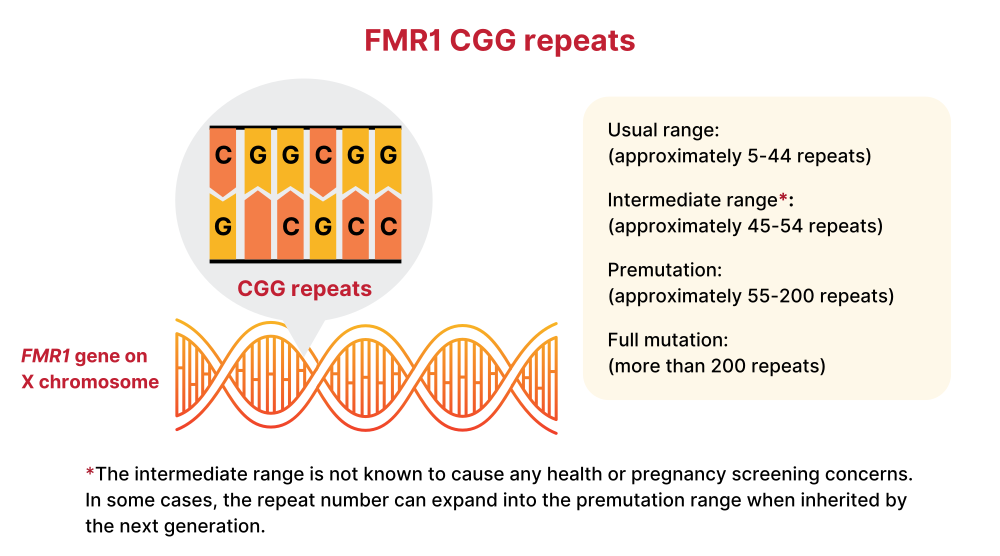
The FMR1 gene contains a section of DNA code where the letters ‘CGG’ are repeated several times – these are known as CGG repeats. The number of CGG repeats can differ between individuals. If there are too many CGG repeats, this can affect the function of the FMR1 gene and result in a Fragile X-associated condition.
Individuals with Fragile X syndrome have a large expansion of the CGG repeat sequence (typically more than 200 CGG repeats), which is known as a full mutation.1,2 Individuals with a smaller expansion (approximately around 55-200 repeats) are known as FMR1 premutation carriers and are at risk of developing a Fragile X premutation-associated condition, such as FXPOI, FXTAS, or FXAND. The likelihood of developing a Fragile X premutation-associated condition varies from person to person, and there are FMR1 premutation carriers who may not develop any of these conditions.
The number of CGG repeats a person has can be passed on to the next generation. The CGG repeats can be unstable during transmission and can expand over generations, resulting in an even higher number of repeats inherited by the next generation. The higher the number of repeats, the more unstable the repeats are and are more likely to expand.
Females who have the FMR1 premutation on one of their two X chromosomes have a 50% chance of passing the premutation on to their child.1 If the FMR1 premutation expands to a full mutation during transmission, the child who inherits the full mutation will have Fragile X syndrome. Fathers who are premutation carriers will pass on their FMR1 premutation to all their daughters but not their sons, as daughters inherit the father’s X while sons inherit the Y chromosome. While small expansions of the CGG repeats can occur in the FMR1 premutation from the fathers, they generally do not expand to a full mutation.4
If you would like to learn more about the inheritance and impact of FMR1 premutations and Fragile X-associated conditions, please ask your doctor for a referral to a genetic counsellor or a geneticist. Genetic counsellors are qualified allied health professionals who can provide information and support regarding genetic conditions and testing. More information about genetic counselling can be found at:
- Information on Genetic Services
- The National and State Services pages underneath the ‘Genetic Counselling’ sections listed
Diagnosis
FMR1 (Fragile X) DNA testing is used to determine the number of CGG repeats in an individual’s FMR1 gene(s). This test can identify people who carry an FMR1 premutation and can also be used to diagnose people with Fragile X syndrome. Testing can be done through a blood test or cheek swab.
Fragile X syndrome is typically diagnosed when FMR1 DNA testing identifies a full mutation (more than 200 CGG repeats) in the FMR1 gene. The diagnosis may involve additional testing to assess methylation, which helps determine whether the expanded gene has been switched off (silenced).
Individuals with 55-200 CGG repeats are classified as FMR1 premutation carriers. Premutation carriers do not have Fragile X syndrome but may be at risk of developing other Fragile X-associated conditions.
More information about FMR1 DNA testing can be found at:
- Pathology Tests Explained: Fragile X gene
- Pathology Tests Explained: FMR1 (Fragile X messenger ribonucleoprotein 1) mutation
Individuals who carry an FMR1 premutation may be at increased risk of developing FXPOI, FXTAS or a range of neuropsychiatric conditions described as FXAND. However, not all premutation carriers will develop these conditions. Diagnosis of a Fragile X-associated condition requires assessment against the relevant diagnostic criteria, and additional tests may be needed to confirm the diagnosis.
Reproductive genetic carrier screening
In Australia, Medicare-funded reproductive genetic carrier screening for cystic fibrosis (CF), spinal muscular atrophy (SMA) and fragile X syndrome (FXS) is available to eligible people who are pregnant or planning a pregnancy. This “three-gene panel” reproductive genetic carrier screening can identify if a reproductive female is a genetic carrier and is at risk of having a child affected by CF, SMA or FXS. If the reproductive female is identified to be a carrier for CF or SMA, Medicare-funded reproductive genetic carrier screening will be available to their male reproductive partner if eligible; however, this is not the case for male reproductive partners of FXS carriers as their genetic status is not relevant in determining their female reproductive partner’s risk of having a child with Fragile X syndrome.
More information about carrier screening for Fragile X syndrome can be found at:
- Australian Government Department of Health and Aged Care: Reproductive carrier testing for cystic fibrosis, spinal muscular atrophy and fragile X syndrome (Last updated 22 November 2023)
- Centre for Genetics Education: Reproductive carrier screening
Please speak to your medical team for more information about the diagnostic pathways for FMR1 premutation or Fragile X syndrome, Fragile X-associated conditions and the option of reproductive genetic carrier screening.
Treatment
Please speak to your medical team to learn more about the possible treatment or management options for your condition. Treatment will depend on an individual’s specific condition and symptoms. It is also important to stay connected to your medical team so that you can be made aware of any upcoming clinical trial opportunities. For many rare diseases, treatment options may be limited. Participation in a clinical trial may provide access to new or emerging therapies.
Clinical Care Team
Healthcare professionals generally involved in the care of individuals with Fragile X conditions may include general practitioners (GP), paediatricians, geneticists, genetic counsellors, psychologists, psychiatrists, neurologists, speech therapists and occupational therapists.1 The need to access this range of different healthcare professionals may change over a person’s lifetime and extend beyond those listed here.
Clinical care for rare diseases often involves a multidisciplinary team of medical, care and support professionals. Please note that the information provided here is as a guide and that RVA does not necessarily monitor or endorse specific clinics or health experts.
This may not be applicable to all rare diseases but for many, palliative care services may be relevant and useful. Palliative care services are available for people (adults, children and their families) living with a life-limiting illness and is not only for end-of-life care. It can also help at any stage of illness from diagnosis onwards, and will look different for different people. Palliative care services provide assistance, support, resources and tools to help people manage their illness and the symptoms, ease pain, and improve comfort and quality of life. If this is relevant to you and you wish to find out more information about palliative care and how it can help you, please visit:
Clinical Care Guidelines
GeneReviews®: FMR1 Conditions has a list of published guidelines and consensus statements; however, not all may be relevant to the Australian context.
Emergency Management
Individuals living with rare diseases may have complex medical issues and disabilities, which are not always visible. It is often useful to refer to their medical history as well as personal information such as a medical card, doctor’s letter, or if available, a rare disease passport, for relevant information.
In addition, individuals, their parents, families and carers often develop extensive expertise on their specific rare disease. It is important to recognise that they can contribute valuable knowledge about their rare condition. Rare diseases often impact individuals differently, so it’s important to consider a person’s lived experience.
Research
Fragile X Association of Australia: Research has information about Fragile X research in Australia.
Rare Disease Organisation(s)
Australian Organisation:
Fragile X Association of Australia
Website: https://www.fragilex.org.au/
Fragile X Association of Australia is a national organisation that supports and serves the Fragile X community, offering information and education, counselling and peer support, and providing a national voice on Fragile X.
Please note that RVA does not monitor or endorse each group/organisation’s operational governance and activities. When engaging with a group, please consider the information on the RARE Portal’s Finding Helpful Peer and Community Supports page.
Lived Experience
Fragile X-associated conditions vary between individuals, and each person’s experience is unique.
If you would like to share your personal story with RVA, please visit the Rare Voices Australia: Share Your Story page. RVA will consider your story for publishing on our website and inclusion on the RARE Portal.
Support Services and Resources
Fragile X Association of Australia provides an Australian-wide Family Support counselling service for individuals and families affected by Fragile X.
For information on available government and social services that provide support for individuals with a rare disease, please visit the National and State Services pages.
Mental Health
People living with a rare disease often face unique challenges such as diagnostic delays, misdiagnoses, limited treatment options, and limited access to rare disease specialists and support. These challenges may impact people’s emotional wellbeing and quality of life. Many find it helpful to seek mental health and wellbeing support to cope with ongoing stress and uncertainty. Connecting with people who have shared experiences through a support group may also be helpful. Information about relevant mental health and wellbeing support can be found at:
- Mental Health and Wellbeing Support for Australians Living with a Rare Disease
- The National and State Services pages underneath the ‘Mental Health’ sections listed
Other Information
Further information on Fragile X-associated conditions can be found at:
- Fragile X Association of Australia: Fragile X Conditions
- Genetic and Rare Diseases (GARD) Information Center: Fragile X syndrome
- Genetic and Rare Diseases (GARD) Information Center: Fragile X-associated tremor/ataxia syndrome
- Genetic and Rare Diseases (GARD) Information Center: Premature ovarian failure 1
Useful Links for Healthcare Professionals
References
- Hunter JE, Berry-Kravis E, Hipp H, et al. FMR1 Disorders. 1998. Updated 16 May 2024. In: Adam MP, Mirzaa GM, Pagon RA, et al. GeneReviews® [internet]. Seattle (WA): University of Washington Seattle. 1993–. Accessed 30 January 2025. https://www.ncbi.nlm.nih.gov/books/NBK1384/
- Hagerman RJ, Hagerman PJ. The spectrum of Fragile X disorders. N. Engl. J. Med. 2025;393(3):281-288. https://doi.org/10.1056/NEJMra2300487
- Johnson K, Herring J, Richstein J. Fragile X Premutation Associated Conditions (FXPAC). Front Pediatr. 2020;8:266. https://doi.org/10.3389/fped.2020.00266
- Royal Australian College of General Practitioners. Fragile X syndrome and associated conditions. Updated 19 December 2023. https://www.racgp.org.au/clinical-resources/clinical-guidelines/key-racgp-guidelines/view-all-racgp-guidelines/genomics-in-general-practice/disease-specific-topics/fragile-x-syndrome-and-associated-conditions
- Pathology Tests Explained. FMR1 (Fragile X messenger ribonucleoprotein 1) mutation. Accessed 30 January 2025. https://ptex.au/ptests.php?q=FMR1+%28Fragile+X+messenger+ribonucleoprotein+1%29+mutation
- Australian Government. Department of Health and Aged Care. Reproductive carrier testing for cystic fibrosis, spinal muscular atrophy and fragile X syndrome. Updated 22 November 2023. 6p. https://www.mbsonline.gov.au/internet/mbsonline/publishing.nsf/Content/0FAE1338D92EA3A3CA258A6F0001701A/$File/FS%20-%20Reproductive%20carrier%20testing%20for%20cystic%20fibrosis,%20spinal%20muscular%20atrophy%20and%20fragile%20X%20syndrome.pdf
Contributors
This page has been co-developed by Rare Voices Australia (RVA)’s RARE Portal team in consultation with Fragile X Association of Australia.
If you are aware of any additional information that may benefit stakeholders with an interest in this page, or if you notice any broken links or inaccurate information, please let us know via the Contribute page.